Moments of tea,
savored with the O Glass Teapot.
The O Glass Teapot is designed in pursuit of functional beauty. Because it is made of heat-resistant glass, you can enjoy watching the tea leaves spread and the colors change through the transparent glass. So that you may spend richer moments enjoying tea with the O Glass Teapot, we introduce how to use it along with recommended teas.
Our guide is Shinya Sakurai, who serves as the representative of SAKURAI Japanese Tea Experience and, as the sōji (founding master) of Saboe, leads activities to create and pass on the forms of tea drinking in the present day. From his perspective, we unravel the appeal of the O Glass Teapot.
What do you value when choosing a teapot?
When choosing tea ware, I value how cleanly it pours and how it feels in the hand.
Everyone's hands are a different size, but where the fingers rest and whether you can brew tea without strain is important. The O Glass Teapot has a longer handle than an ordinary one.
That length gives it balance, so it rotates very easily when pouring — I found it a tool that makes brewing tea effortless.
How does the O Glass Teapot feel to use?
Because it is heat-resistant glass, you can clearly watch the tea leaves move and open as you pour the hot water.
The wide opening also makes it easy to add seasonal herbs and fruit — shiso, sudachi, grapes and the like — to match the tea, so it is convenient for enjoying blended teas as well.
It is also easy to remove the spent leaves once you have finished brewing, and very easy to clean — that is one of its distinctive strengths. A glass teapot with this kind of shape is, I think, surprisingly rare.
It is also beautifully designed, shaped so the water sits just right — a tool precisely calculated for brewing a single serving of tea.


What is your impression of the wooden lid?
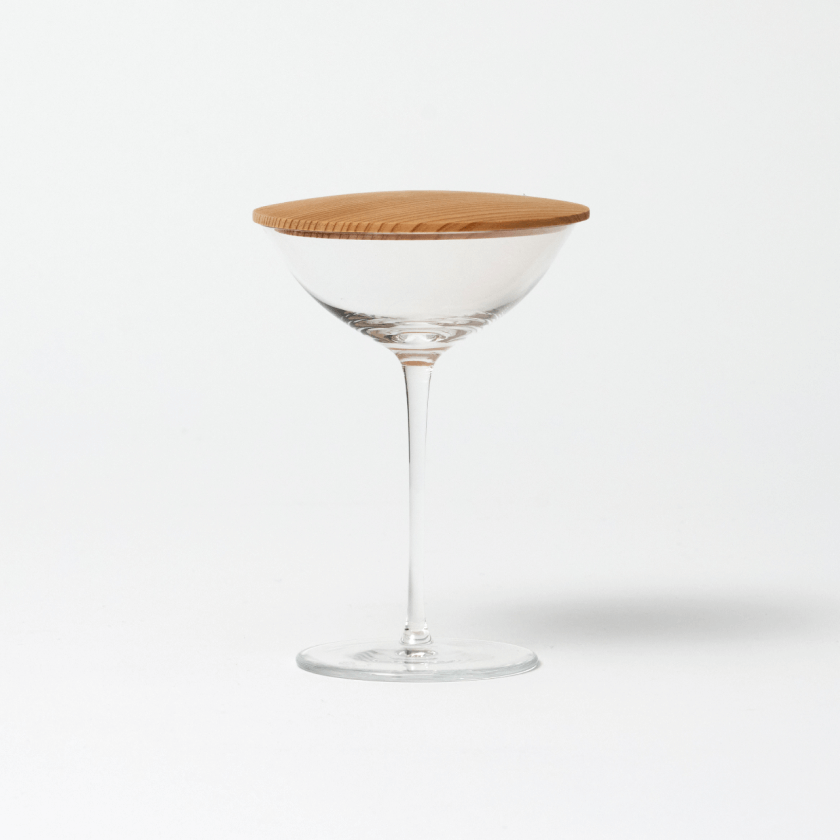
Tea comes from nature, and wood, too, is a natural material. Glass alone can feel somewhat inorganic, but with the addition of the cedar lid, the tea itself seems to shine more beautifully. It feels good to the touch, and the scent unique to cedar left a strong impression. The fragrance softens gradually with use, and including that kind of aging, I think it grows into something you become more attached to the more you use it.
Which teas would you recommend for the O Glass Teapot?
In terms of type, for sencha a standard-steamed sencha with straight, well-extended leaves is well suited.
The color of the tea is beautiful, and you can clearly see the leaves opening in the water. With black tea, Chinese tea, or oolong there is also the "jumping" of the leaves, which is very interesting to watch. Brewing teas like these, I think you can truly feel what makes the O Glass Teapot special.
Who would you like to see using the O Glass Teapot?
For those who enjoy a variety of teas, I think it is an especially practical teapot. It suits a wide range of teas beyond Japanese tea, so I would be glad if you used it naturally in everyday life. And when you have guests, too, I hope you will savor the moment of tea while taking visual pleasure in the brewing process.

Shinya SakuraiDirector, SAKURAI Japanese Tea Experience / Sōji, Saboe
After serving as manager at Yakumo Saryo and HIGASHIYA, he became independent in 2014. In Minami-Aoyama, Tokyo, he opened the Japanese tea specialty shop "SAKURAI Japanese Tea Experience," selling carefully selected Japanese teas from across the country, hōjicha roasted in-house, and seasonal blended teas combining domestic natural ingredients. At the adjoining tea salon, guests can enjoy tea courses and tea-based spirits together with wagashi.
At Saboe, as part of efforts to create and pass on the forms of tea in the present day, he holds tea presentations and seminars in Japan and abroad, and is also responsible for menu planning and proposals and for training tea practitioners.

Together with artisans who possess Japan's proud traditional techniques, we are engaged in the "creation of everyday tools" for the present day. Bridging Japanese traditional culture from past to present and from present to future, we propose a refined and abundant way of living for the world.